- Get link
- X
- Other Apps

Juliane Koepcke was seventeen years old when her plane broke apart two miles above the Peruvian rainforest on Christmas Eve in 1971. She fell straight into the thick jungle while still strapped to her seat. She woke up alone on the dirt with a broken collarbone, a deep cut on her arm, and one shoe.
Against every single rule of survival, she survived eleven days in the wild and walked out alive. She was the only one of ninety-two people on LANSA Flight 508 who made it back home. Her story is still one of the most shocking tales of human grit ever recorded.
The Flight That Changed Everything
It started as a simple trip home for the holidays. Juliane and her mother, Maria, boarded a turboprop plane in Lima, Peru. They were flying to Pucallpa to meet Juliane's father, Hans-Wilhelm, for Christmas. He was a famous biologist who studied rainforest animals. Juliane had lived at their jungle research station for two years. She knew the names of the trees, the bugs, and the calls of the wild birds.
About half an hour into the flight, the plane hit a massive storm. Dark clouds wrapped around the windows. Luggage fell out of the bins over their heads. Presents flew through the aisle. Lightning struck the plane right in the wing. Juliane saw a bright flash and heard her mother say her last words: That is the end, it is all over. Then the plane fell into a fast dive.
The noise was deafening. The plane ripped apart in midair. Juliane remembered the wind roaring in her ears. She was suddenly flying through the open sky, still strapped into her three-seat row. The green tree tops spun below her. Then everything went dark.
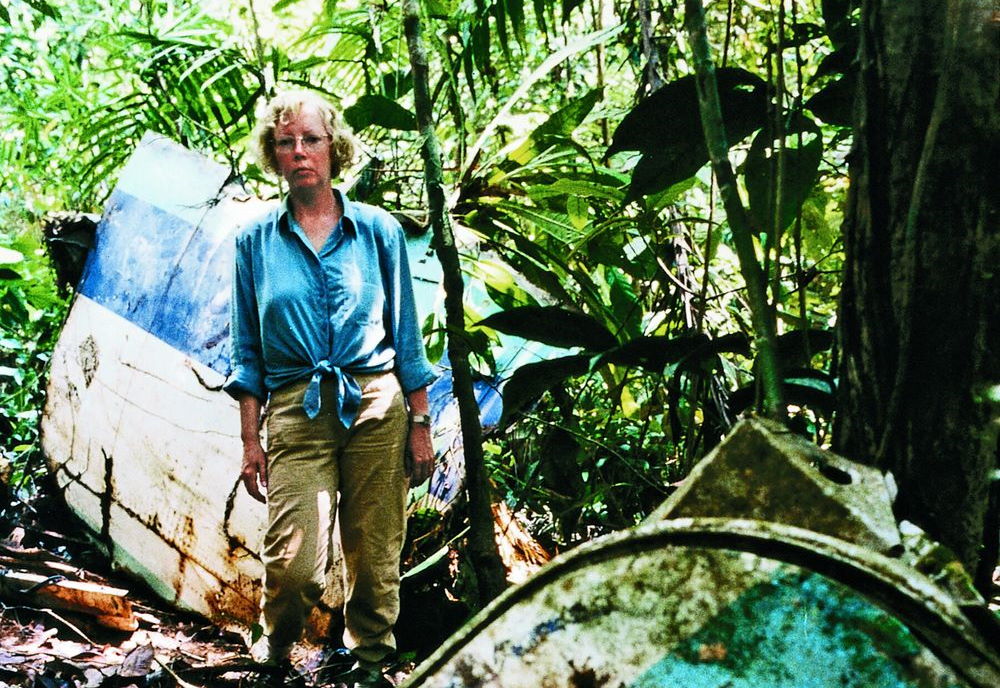
Waking Up Alone in the Amazon Jungle
Juliane did not wake up until the next day. The thick leaves of the trees had slowed her fall like a giant net. Rain dropped on her face. She sat up in the mud, dizzy and confused. Her left eye was swollen shut, and her right knee was badly hurt. She was wearing only a thin summer dress and one sandal.
She called out for her mother. No one answered. The jungle was loud with the sounds of bugs and frogs, but there were no human voices. She found a small bag of candy in the dirt near her seat. That sweet candy was the only food she would eat for the next eleven days.
Most people would panic and stay right where they crashed. Juliane remembered a quick tip her father told her years before. If you are lost in the rainforest and find water, follow it downstream. A small trickle turns into a stream. A stream leads to a river. Humans almost always build their homes near rivers.
Walking Through Dark Water and Insects
Juliane picked up a stick to test the mud in front of her. She lost her single shoe early on, so she walked barefoot over sharp rocks and thorns. The heat was brutal. Swarms of tiny flies bit her skin, leaving red bumps that burned. Maggots started to hatch in the open wound on her arm.
She found a small stream and began to walk right in the water. The water was cool, but it hid danger. Piranhas and stingrays lived in those rivers. Juliane knew that if she stayed in the middle of the deep water, the stingrays would not step on her. She floated on her back when the current got strong. You can learn more about survival skills people use in wild spots like this.
The nights were the hardest part. It rained constantly. Juliane could not sleep because of the cold wet mud. She had no jacket and no fire. She lay awake in the dark, counting the hours until the sun came up. Planes flew overhead searching for survivors. But the leaves were so thick that the pilots could not see a single girl down below. After a few days, the engine sounds stopped completely. She knew she was on her own.
The Small Boat on the Bank
By day ten, Juliane could barely stand up. Her feet were swollen and bleeding. She had lost weight and was very weak from eating only those few candies. Her cut arm was turning black from infection. She was floating down a much bigger river when she saw something strange through her good eye.
It was a motorboat sitting on the riverbank. For a second, she thought she was dreaming. She crawled up the muddy bank toward the boat. Next to it, she found a small wooden hut with a palm roof. The hut was empty, but it had a small can of gasoline inside.
Juliane remembered how her father treated sick animals on their farm. She poured the gasoline directly onto her open arm wound. Thirty-five maggots crawled out of her flesh. The pain was awful, but it saved her arm from getting worse. She fell asleep on the hard floor of the shelter, too tired to keep going.
How Local Lumberjacks Saved Her Life
The next morning, three Peruvian lumberjacks walked up to the hut. They stopped in their tracks when they saw her. Her face was bruised, her clothes were torn, and her eye was bloodshot. They thought she was a water spirit from local myths. Juliane spoke to them in clear Spanish. She explained what happened to the plane. Read more incredible true moments in our collection of real human survival stories from around the globe.
The men gave her clean food and treated her wounds. They put her in their boat and rowed her down the river for seven long hours to a small town with a clinic. A pilot then flew her to a real hospital where her father was waiting. Their tearful reunion made news headlines all over the world. You can read about how a human-interest story like hers moves people everywhere.
Juliane was the only survivor out of all ninety-two people on board. Searchers later found the rest of the plane, including her mother, but no one else survived the crash. Juliane went on to study biology just like her parents. She moved back to Germany, got her degree, and spent her life protecting the very jungle that almost took her life.
Why Did Juliane Survive When Others Did Not?
Scientists and doctors looked at her story for years to figure out how a young girl survived a fall from the sky. Her seat row likely slowed her down as it spun like a helicopter seed through the air. The thick green jungle canopy also broke her landing. But her physical safety was only half of the puzzle.
Her knowledge was her real shield. She did not drink bad water from puddles. She did not eat strange fruits that could poison her. She knew that rivers lead to people. She kept her head clear when fear tried to take over. Explore more unbelievable real life events to see how ordinary people handle wild moments.
Her story shows us that cool thinking is worth more than strength. When everything goes wrong, remembering one good piece of advice can pull you through the dark. What is the one rule you would rely on if you were lost in the wild?
Comments
Post a Comment